The Time is Now: Rising Electricity Rates, Declining Solar Costs, and Limited-Time Incentives
By Alan Sherman
Rising costs are putting increased pressure on most nonprofit organizations’ operations. According to the Nonprofit Finance Fund, in 2024, 86% of nonprofits reported that high costs due to inflation affected their organizations and the clients they serve. Many of these organizations point to hiring freezes, staff burnout, and the need to cut back on services as implications of rising cost pressures.
As the National Philanthropic Trust noted, while for-profit businesses can often react to rising costs with corresponding increases in their prices, nonprofits typically don’t have the same option, making them particularly vulnerable during inflationary periods. And as inflation puts pressure on the communities they serve, demand for nonprofit services often increases as well – adding further strain to already tight budgets.
Energy Costs Are a Particular Challenge
Adding to these challenges is the rising cost of electricity that nonprofits face, and a growing portion of nonprofits’ budgets is now designated to cover energy expenses. In a survey conducted by the Nonprofit Finance Fund, nearly 70% of nonprofit organizations in the United States reported that energy costs represent a considerable share of their operating budgets. In fact, according to the Environmental and Energy Study Institute, energy costs are the second-highest operational expense for many nonprofits, behind salaries.
Unfortunately for nonprofits, the trend in energy prices is worsening. According to Goldman Sachs, electricity prices increased 6.9% in 2025 year over year, more than double the headline inflation rate of 2.9%. This is expected to continue, with electricity prices rising an additional 6% through 2027, the firm said.
This issue is particularly acute in Massachusetts, where electricity rates are now 2x the average of the rest of the United States, and rising at an accelerated rate:
Average retail price of electricity, quarterly
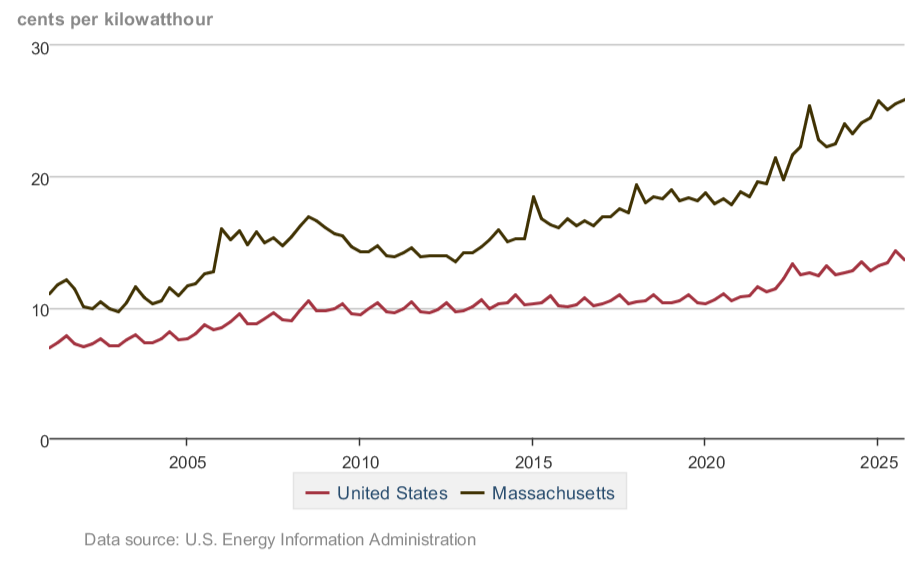
This means that across the country — and especially in Massachusetts — electricity costs are rising even faster than overall expenses, creating an outsized burden on already stretched operating budgets.
Fortunately, There Is a Solution
Nonprofit organizations need not suffer the consequences of rising electricity rates. In fact, energy is one of the few expenses that organizations can proactively mitigate. By installing their own solar energy systems, they can effectively protect themselves from rising electricity rates because the sun is free and available daily for their use. Solar energy reliably reduces nonprofits’ electricity costs by 40 to 100%, depending on system size, site conditions, and other factors, and minimizes bill variability, effectively insulating organizations from rising energy prices. It provides fixed energy costs for 25+ years with minimal maintenance, and pays for itself typically after 5–7 years, then produces electricity for free. Solar gives organizations control over their energy costs and provides them with stable, reliable power.
And organizations can do all of this at a time when solar has never been more cost-effective. According to the Solar Energy Industry Association (SEIA), the cost of solar has fallen by 84% since 2009 and it now consistently generates lower-cost electricity than other generation sources. Nonprofits that obtain their electricity from solar can then redeploy the funds they previously used to cover their energy costs into better fulfilling their mission.
What Makes This a Particularly Good Time for Solar?
Beyond long-term cost stability, current public policy makes this an especially advantageous moment to act. Since the Inflation Reduction Act was passed in 2022, the federal government has offered nonprofits very attractive tax incentives ranging from 30% to 70% of the cost of a solar installation. However, with the passage of the One Big Beautiful Bill Act, these federal incentives are scheduled to phase out under the current law. Nonprofits must either complete their solar projects by December 31, 2027, or make a commitment (through a process known as “Safe Harbor”) by July 4, 2026, which then extends the deadline for installation to 2030. (Learn more in this Resonant Energy article.)
Fortunately for Massachusetts-based nonprofits, there are also attractive state incentives available. The newest program, known as SMART 3, provides significantly higher cash incentives than previous iterations of the program. Additionally, the Department of Energy Resources has recently launched the Low-Income Services Solar Program (LISSP), which funds up to 100% of the installation costs for a solar array.
Combining the federal and state programs currently in effect through July 4, this time can be considered the “Incentive Sweet Spot” for nonprofits that are considering solar energy. Even for those organizations that may not be in a position to fund the upfront cost of a solar implementation, there are no-cost creative financing opportunities available such as Power Purchase Agreements (PPAs) and Community Solar, which offer meaningful energy cost savings, substantially reducing electricity cost pressures. While the federal tax credit remains in place, financiers will be able to offer more compelling no-cost options for solar projects, but as the tax credit is phased out, the economics of no-cost projects will become more challenging. Regardless of which financing pathway organizations choose, now is the time to get started.
Real-World Example
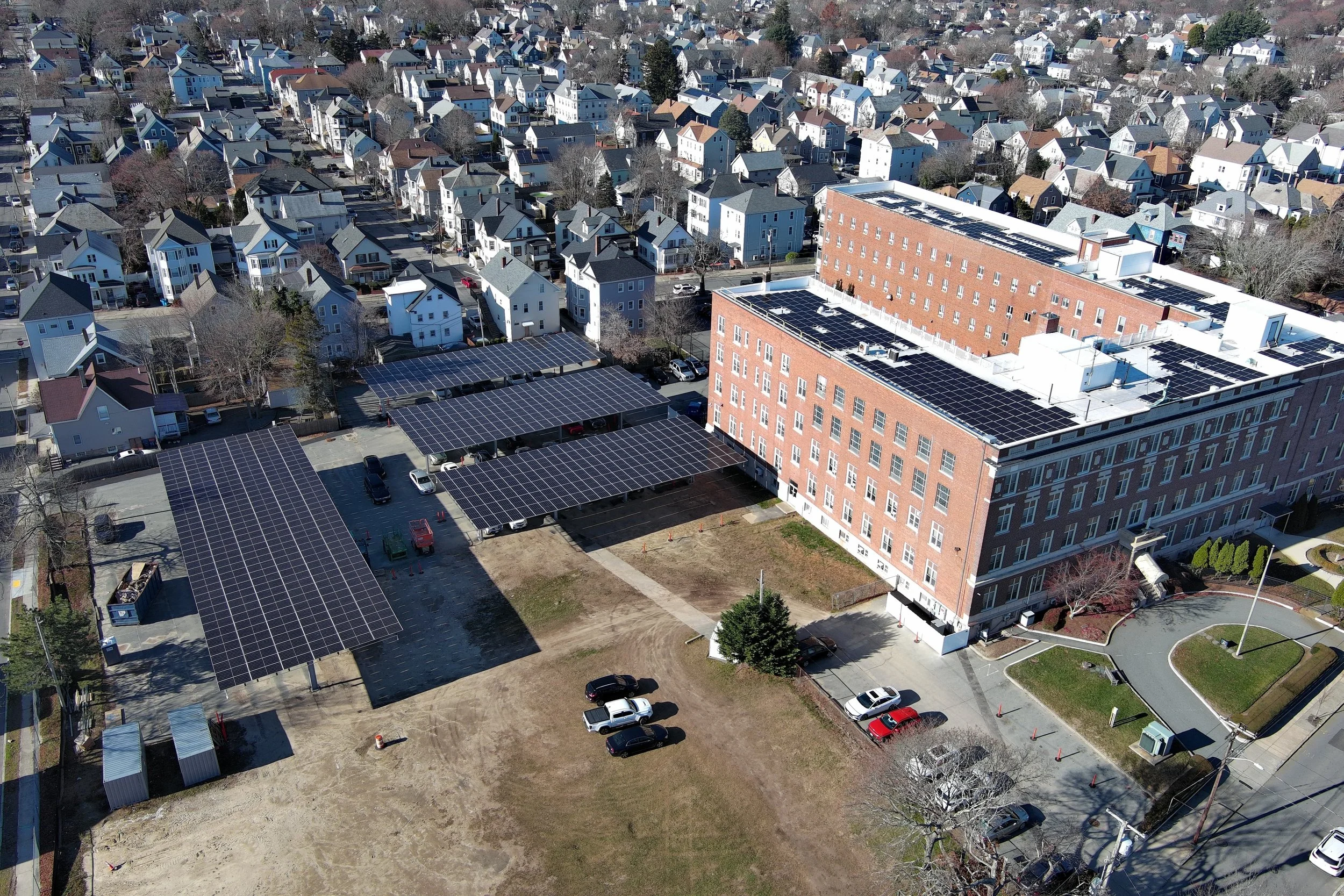
A mid-sized Massachusetts nonprofit senior living facility recently installed a 510 kW combined rooftop and canopy system. By taking advantage of all available federal investment tax credits as well as state SMART incentive, the organization was able to achieve an 11.8% IRR, stabilize energy costs for decades, and generate $2.8 million in expected lifetime savings. Together, the two solar systems will cover 50% of the nursing home’s electricity usage.
Key Takeaways
Costs are rising. Nonprofits’ costs are increasing overall, and energy costs are rising at a disproportionate pace, particularly in Massachusetts.
Solar offers energy cost stability. Forward-thinking organizations are implementing their own solar energy systems – whether rooftop or canopy – to mitigate or even eliminate the cost of electricity.
The time is now. Attractive federal and state incentives are available for a short time – only until July 4, 2026 – making this a particularly opportune time to make a commitment to implement solar, with four more years afterwards to actually construct the system. For nonprofits evaluating solar, the current incentive structure creates a rare and time-sensitive opportunity.
The future is still bright. Even after the federal incentives expire, solar still offers attractive financial benefits, with somewhat longer payback periods than the tax credits provide.
Resonant Energy stands ready to help. Resonant is a solar developer with a unique focus exclusively on solar energy for nonprofit organizations. We understand their challenges and we partner closely with them through all phases of the planning, feasibility, selection, funding, permitting, sourcing, construction, and operations of a solar energy system.
Learn more about how Resonant Energy works with nonprofit organizations, and reach out for more information.