SMART 3: Program Year 2026 Update
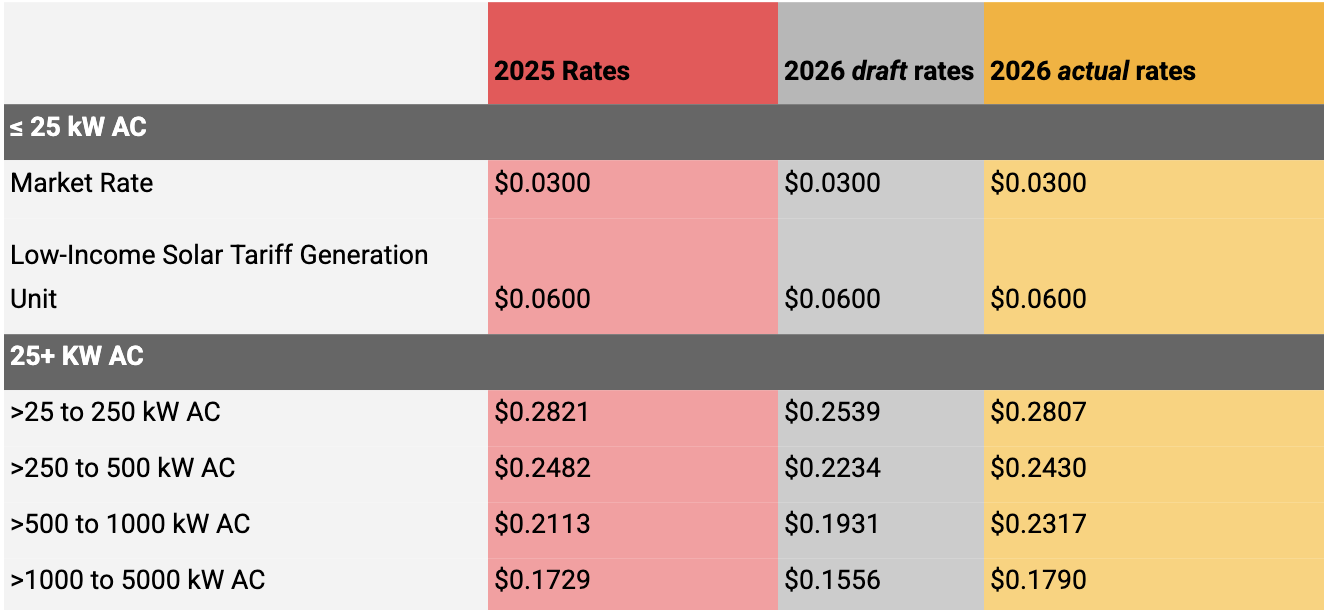
Last Monday, the Department of Energy Resources released the 2026 Program Year Report with the updated SMART rates and MW capacity for next year. At a high level, the final rates are more favorable than the draft rates or unchanged from the 2025 program year, which is great news for projects that will be locking in their SMART rate next year.
Below is a table summarizing the changes in base compensation rates
Adders
While most of the key SMART adders remain unchanged, one key improvement that Resonant advocated for in the new program year is a slight bump to the Low-Income property adder, increasing from $0.04 to $0.05. Resonant advocated for a larger increase to the Low-Income Property Adder, but the DOER is restricted from changing any aspect of the program by more than 20% in a given program year, making $0.01 the maximum allowable increase.
While this increase might not seem significant, for a 100 kW project, this could represent an additional $23,000 in revenue over 20 years. After the federal investment tax credit begins to step down in 2026, local incentives like this one will play a critical role in ensuring that solar is still feasible for low-income properties.
Going Forward
While the base SMART rates established are favorable, it is important to note that we anticipate a significant increase in the Behind-the-Meter Value of Energy in January. The SMART incentive rate is calculated by subtracting the value of energy from the SMART base rate, so a higher value of energy results in a lower SMART incentive.
Each year, the DOER will release the Draft Annual Program report on October 1, with a 30-day public comment period. This report will include draft values for all rates. Resonant and our partners will continue to offer feedback during this period to advocate on behalf of our nonprofit and affordable housing clients.
Following this public comment period, the DOER will release the Final Program Year Report on December 1, which will include any changes to the program’s total capacity, capacity allocations to each utility, set asides for certain project types and changes to the base compensation rate and adders.
As always, we will continue to monitor and advocate for robust solar policy at the state level. If you have any questions about how the SMART program impacts your project, please reach out to your Business Development Manager.